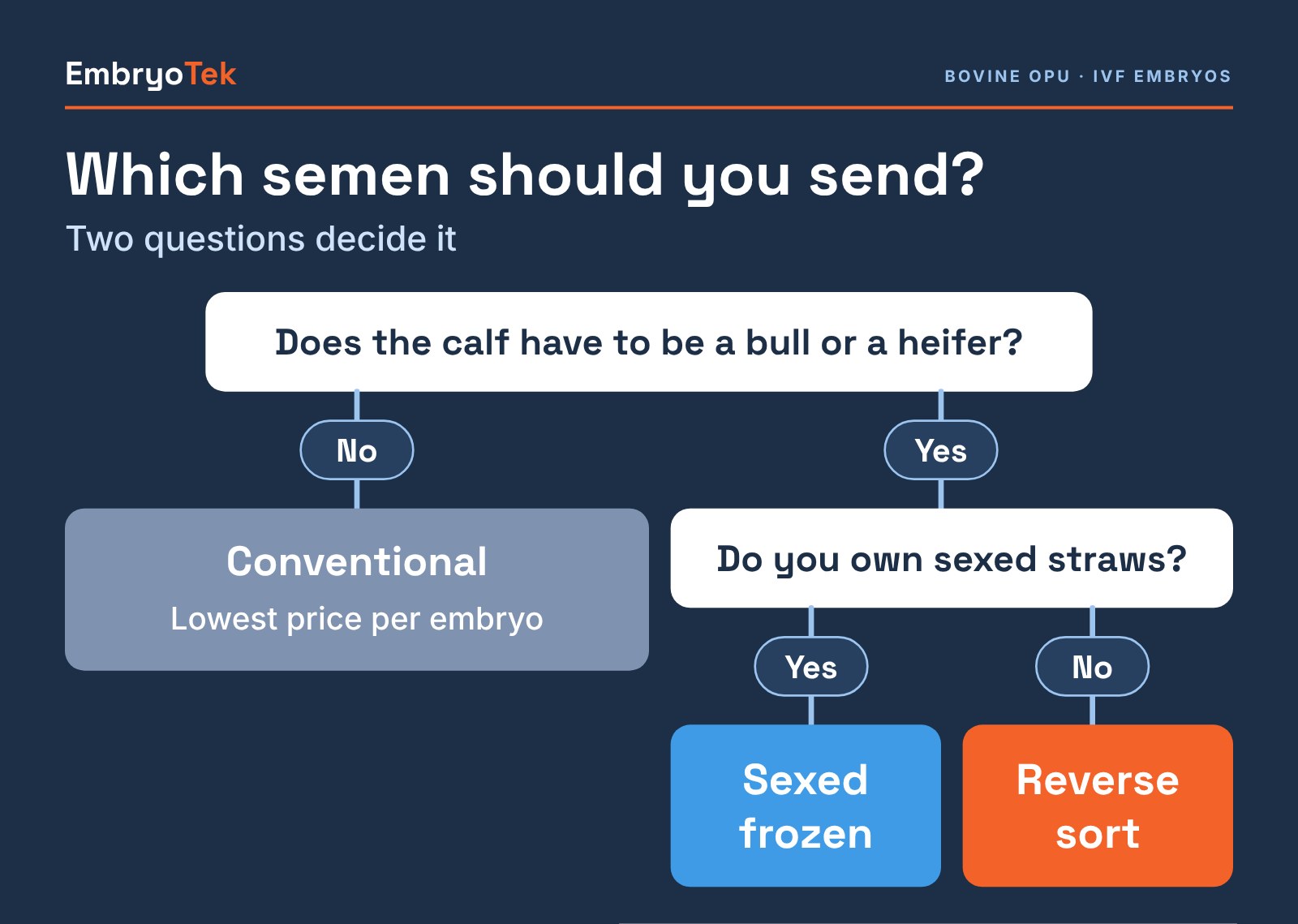
Semen for OPU and IVF: Conventional, Sexed or Reverse Sort?
How conventional, sexed frozen and reverse-sorted semen compare for OPU and IVF embryos: calf sex, embryo numbers, cost and how much semen to send.
Read the article →



Two of your best donors are often the two you cannot flush: the cow that is already bred, and the heifer that is too young. Ovum pick-up (OPU) with IVF was made for both. Here is what is possible, what the limits are, and what to expect.
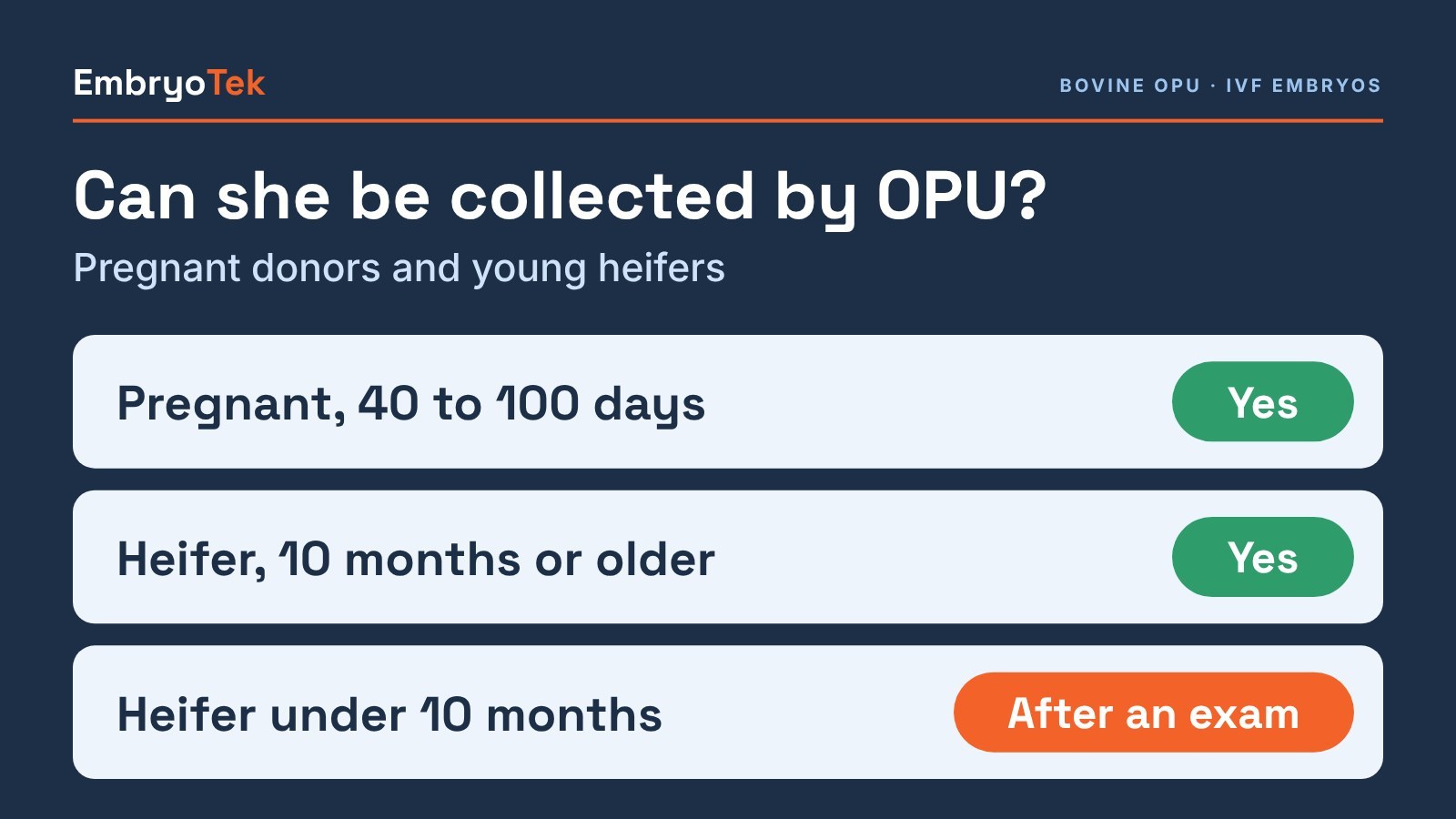
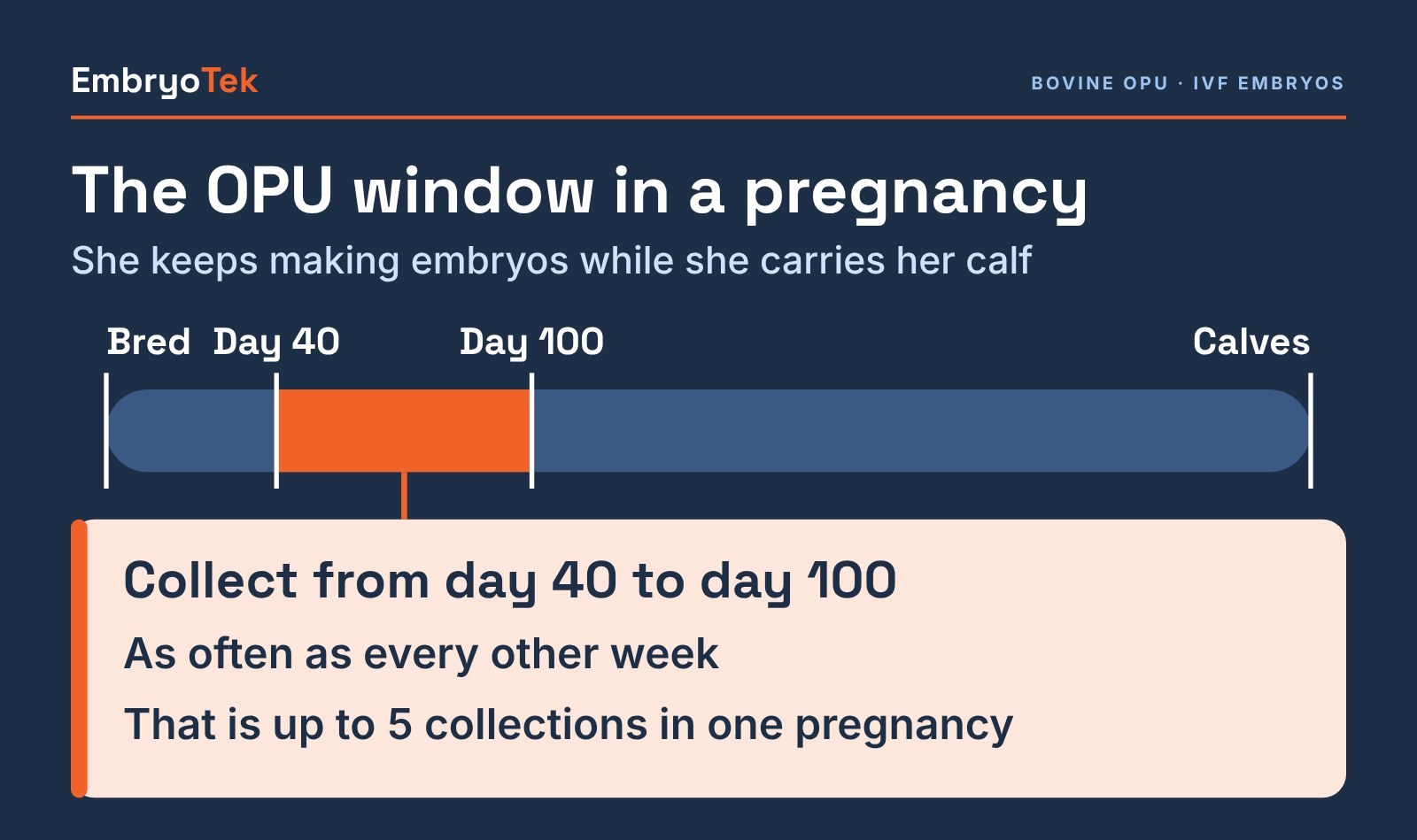
Yes. Trans Ova Genetics, the lab that makes your embryos, collects pregnant donors from 40 to 100 days of pregnancy, and says a large share of its IVF program is made up of pregnant donors. The cow keeps carrying her own calf while her oocytes are turned into more embryos.
A donor can be collected as often as every other week, as long as the veterinarian considers that best for her. Between day 40 and day 100 that is room for up to five collections.
A good cow that is bred back is normally out of your embryo program until she calves. With OPU she stays in it. You get her natural calf and a set of IVF embryos from the same pregnancy, and you can use a different sire for the embryos than the one she is carrying.
Trans Ova tells its clients there is a slight risk of pregnancy loss, because the reproductive organs are handled during the collection. As with any procedure, OPU also carries a small risk of bleeding or infection. Talk it over with us before you book a pregnant donor you cannot afford to have slip.
Trans Ova prefers a donor to be at least 10 months old. A younger heifer can be scheduled if she is physically mature enough, and a Trans Ova veterinarian has to examine her first to confirm she can be collected.
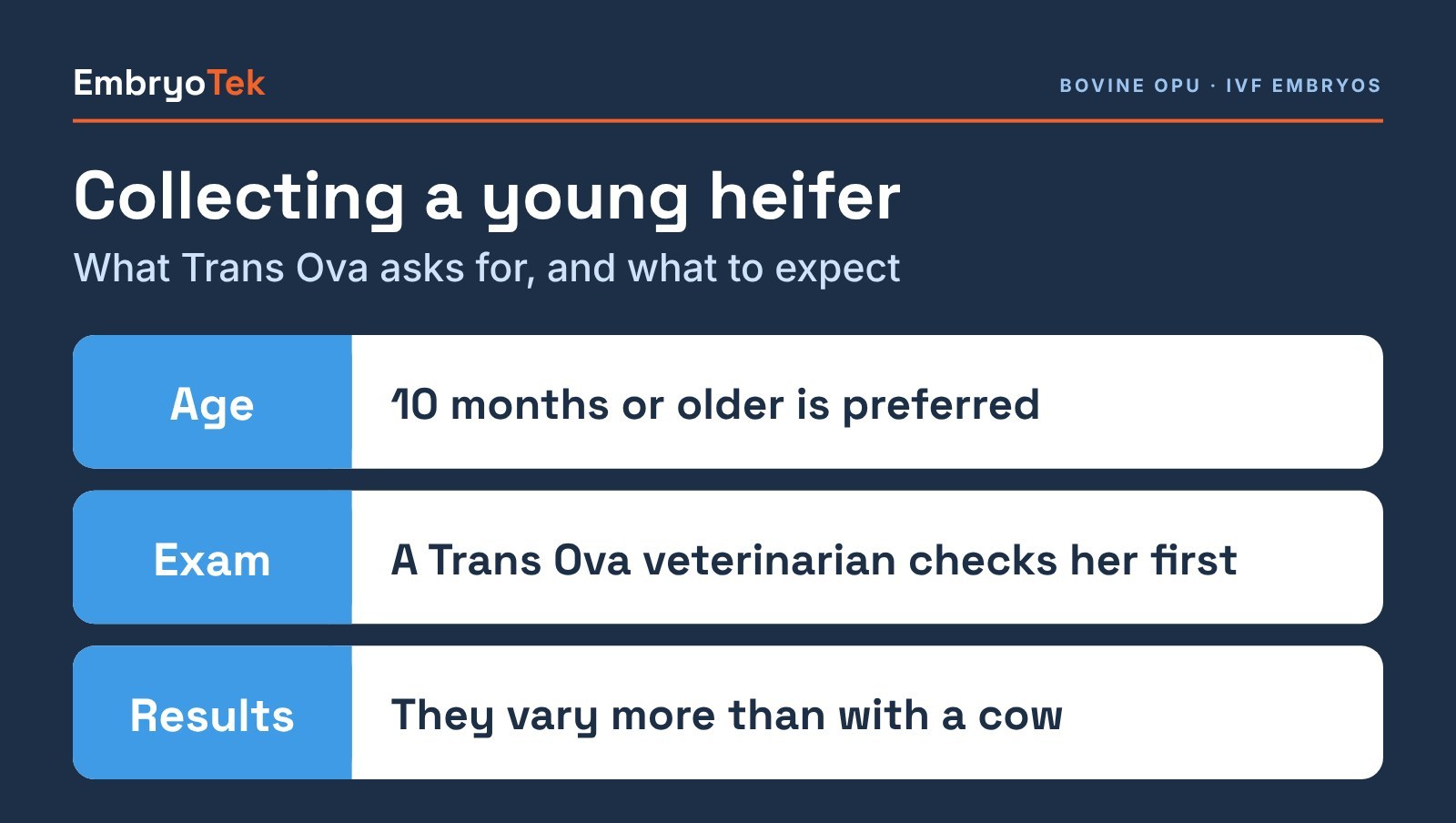
The sooner your best heifer has calves on the ground, the faster your herd improves. Collecting her before she is old enough to breed can put her first embryo calves on the ground about the time she would normally be having her own first calf.
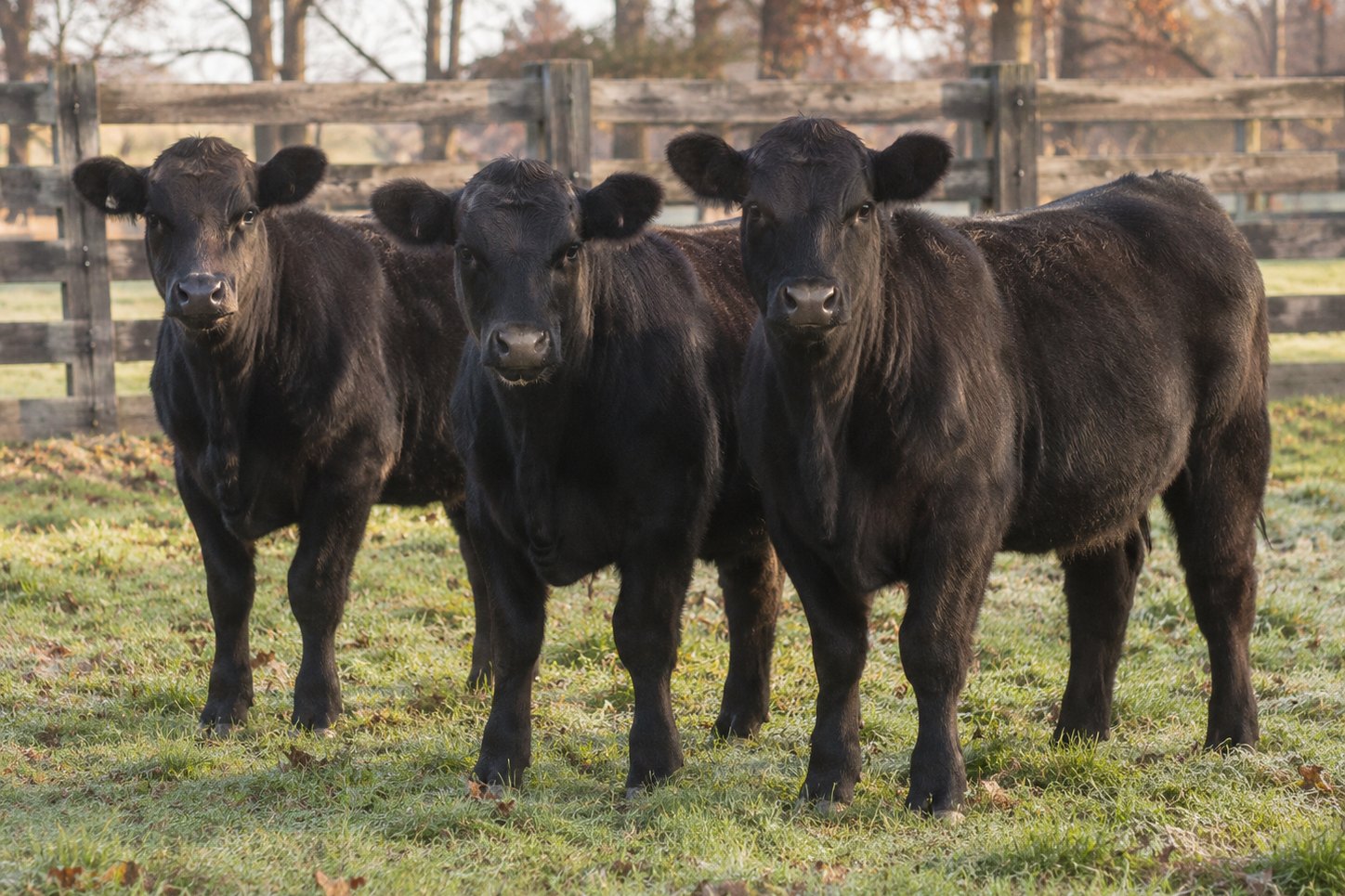
Be ready for more ups and downs. Trans Ova reports that results are much more variable with very young heifers, and that they often produce fewer embryos than the averages for mature donors. Some heifers do very well and some give little, and one collection will not tell you which kind you have.
For donors overall, Trans Ova reports about 18 to 22 oocytes from a typical collection, with about 30% developing into viable embryos. Every donor is different, and not every donor makes viable embryos every time. A very young heifer will usually come in under those numbers.
She is worth a try too. Trans Ova has had success with donors that could not produce embryos by conventional flushing, including cows whose flushes gave unfertilized or degenerate embryos.
Call or text 901-482-3692 and tell us how far along she is, or how old she is. Then schedule OPU online, read the donor checklist, or see how OPU compares with a conventional flush.
How conventional, sexed frozen and reverse-sorted semen compare for OPU and IVF embryos: calf sex, embryo numbers, cost and how much semen to send.
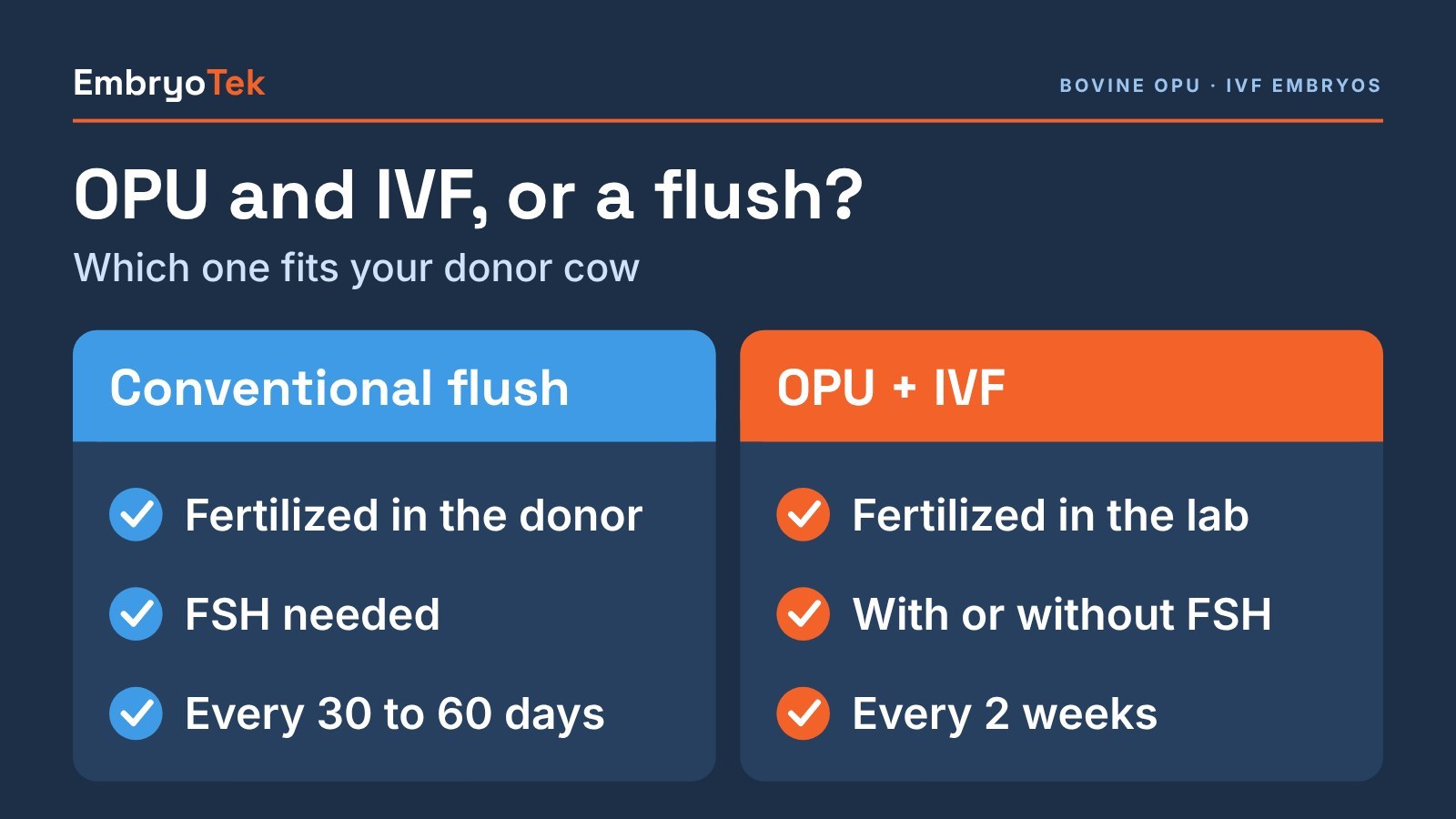
Read the article →Embryo flushing or OPU and IVF? See the differences side by side and the six signs a donor cow is a better fit for OPU, from EmbryoTek in Senatobia, MS.
Read the article →