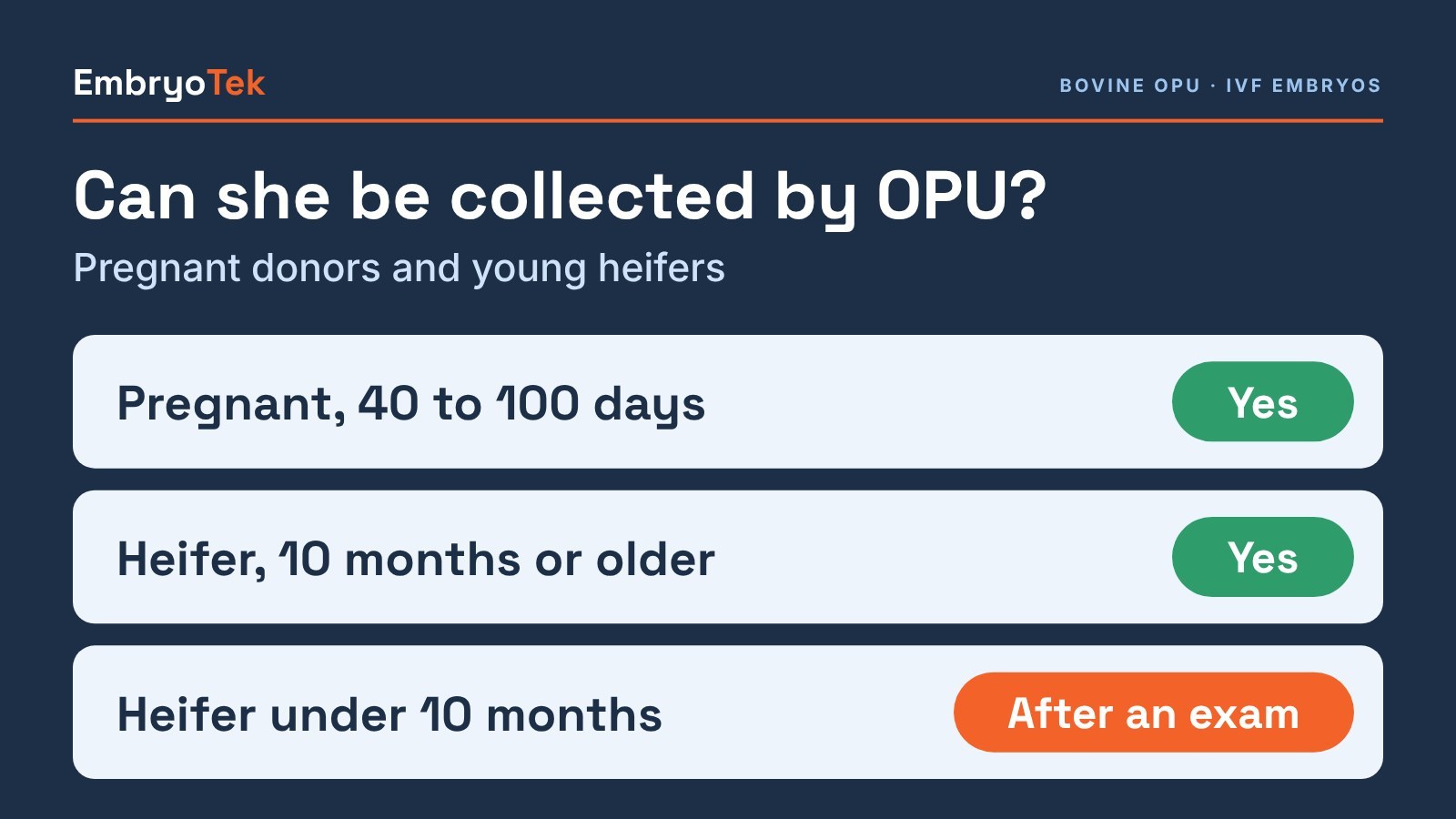
Can You Collect a Pregnant Cow or a Young Heifer? What OPU Allows
Pregnant donors can be collected by OPU from 40 to 100 days, and heifers from about 10 months. The limits, the risks and what results to expect.
Read the article →



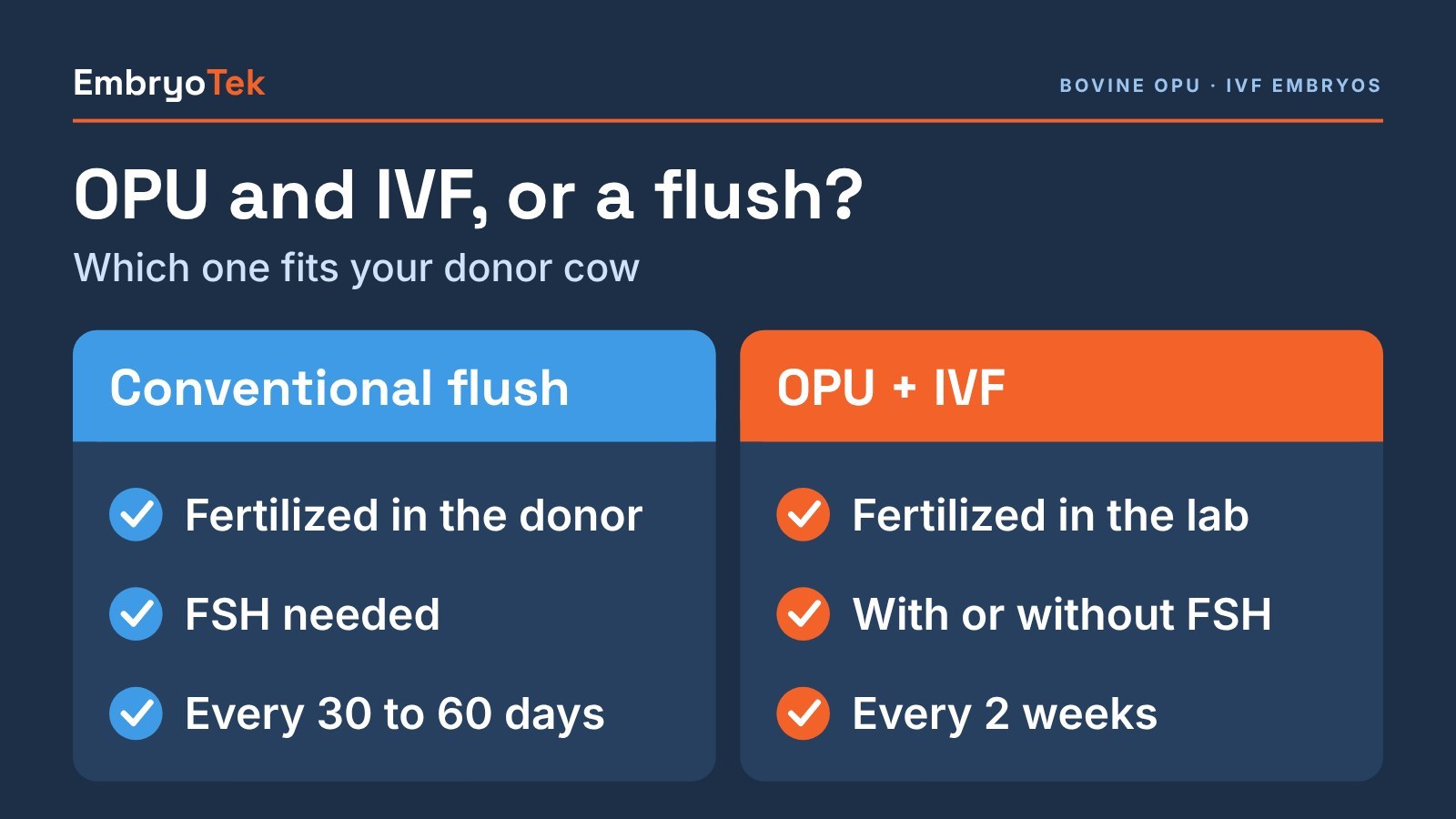
If you own a cow worth multiplying, you have two ways to get more calves out of her in a year: a conventional embryo flush, or ovum pick-up (OPU) with IVF. Both work. They suit different donors, and the right choice depends on the cow in front of you more than on which method is newer.
With a conventional flush, the donor is given FSH injections so she releases several eggs at once. She is bred, and fertilization and the first week of embryo growth happen inside her. The embryos are then flushed out of the uterus about seven days later.
With OPU and IVF, the oocytes are collected straight from the donor’s ovaries through a needle guided by ultrasound. They are fertilized in the lab 20 to 24 hours later and the embryos grow in an incubator for seven days. At EmbryoTek the collection takes about 20 minutes a donor, and Trans Ova Genetics does the lab work.
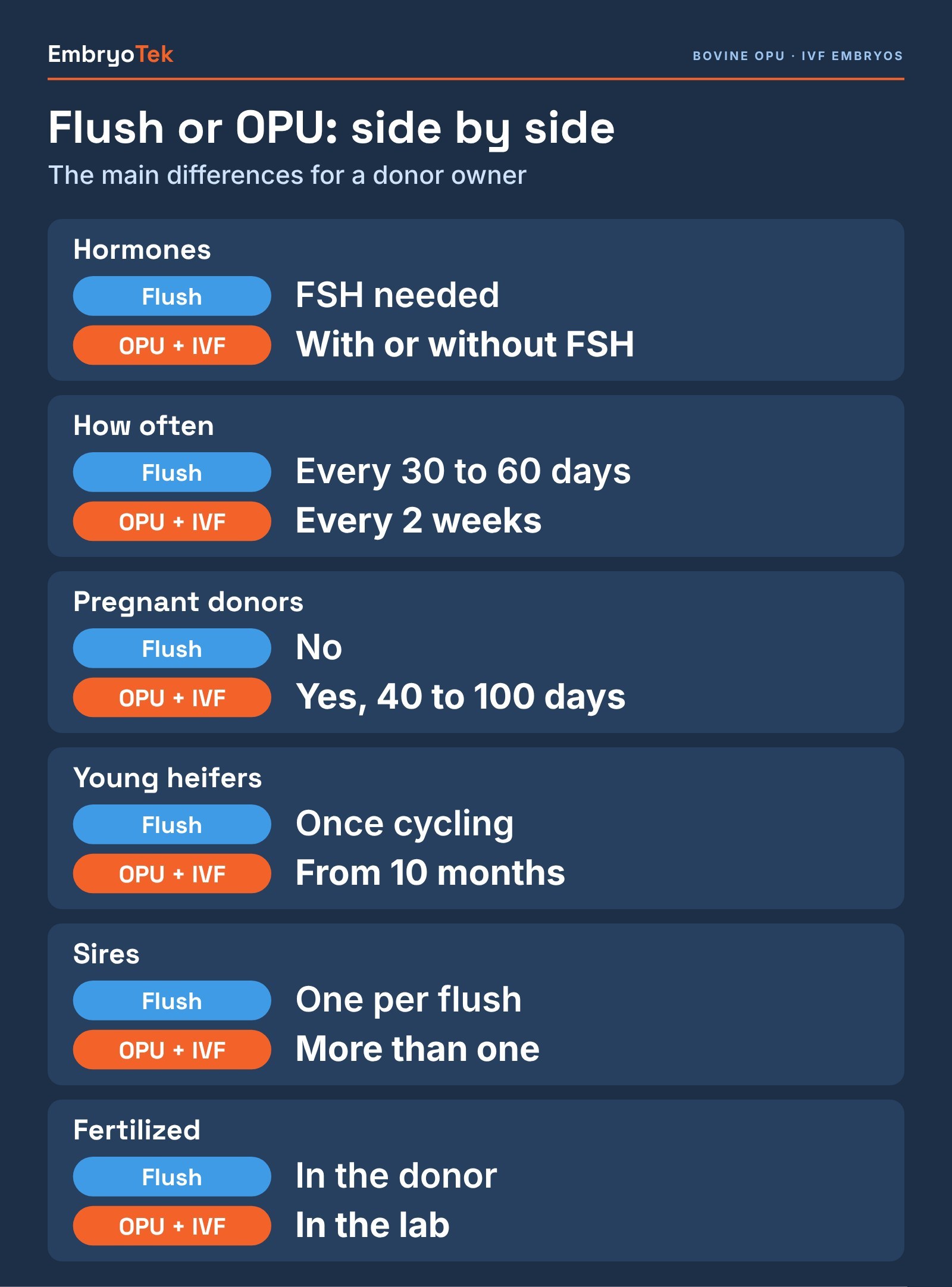
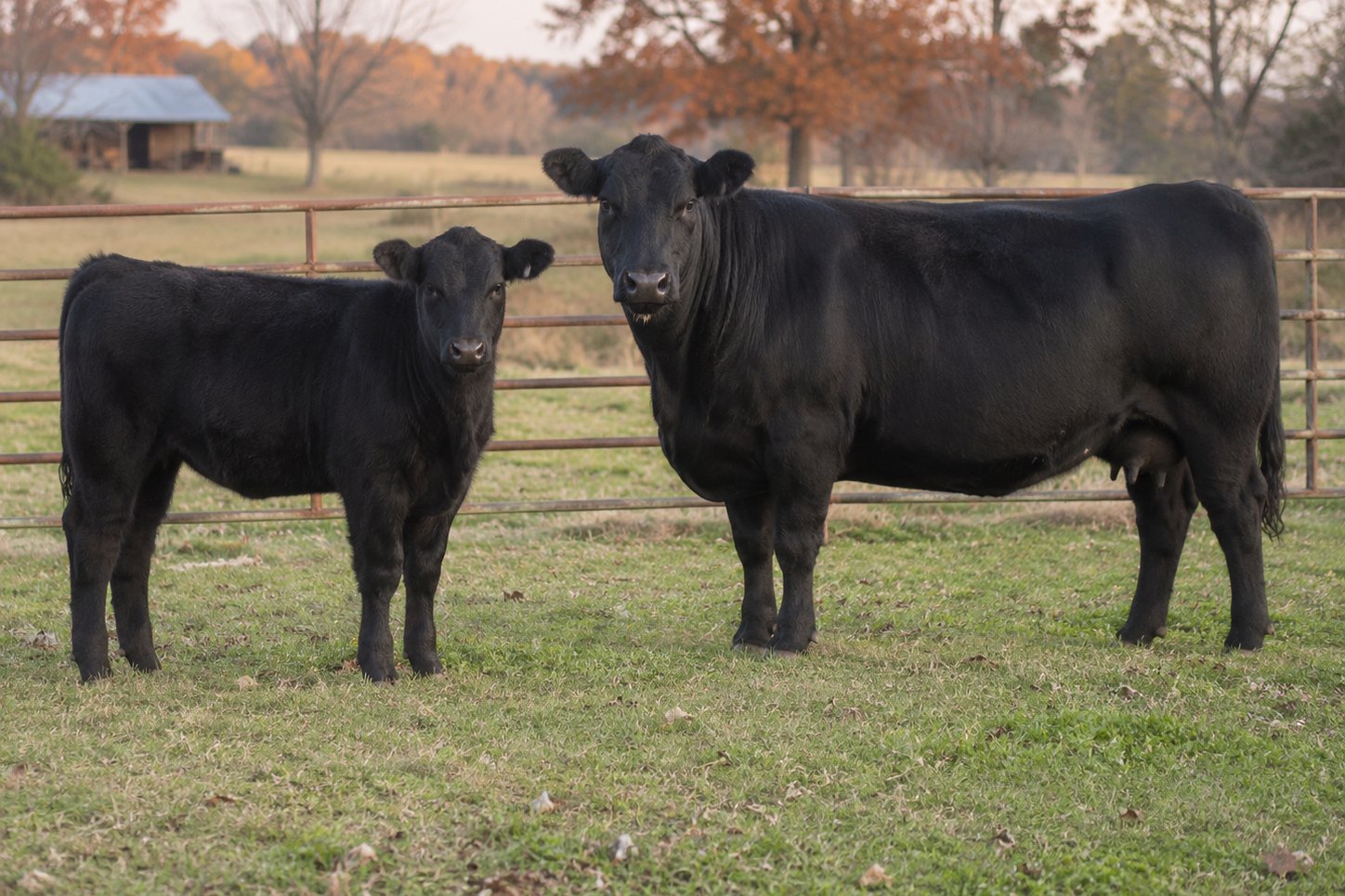
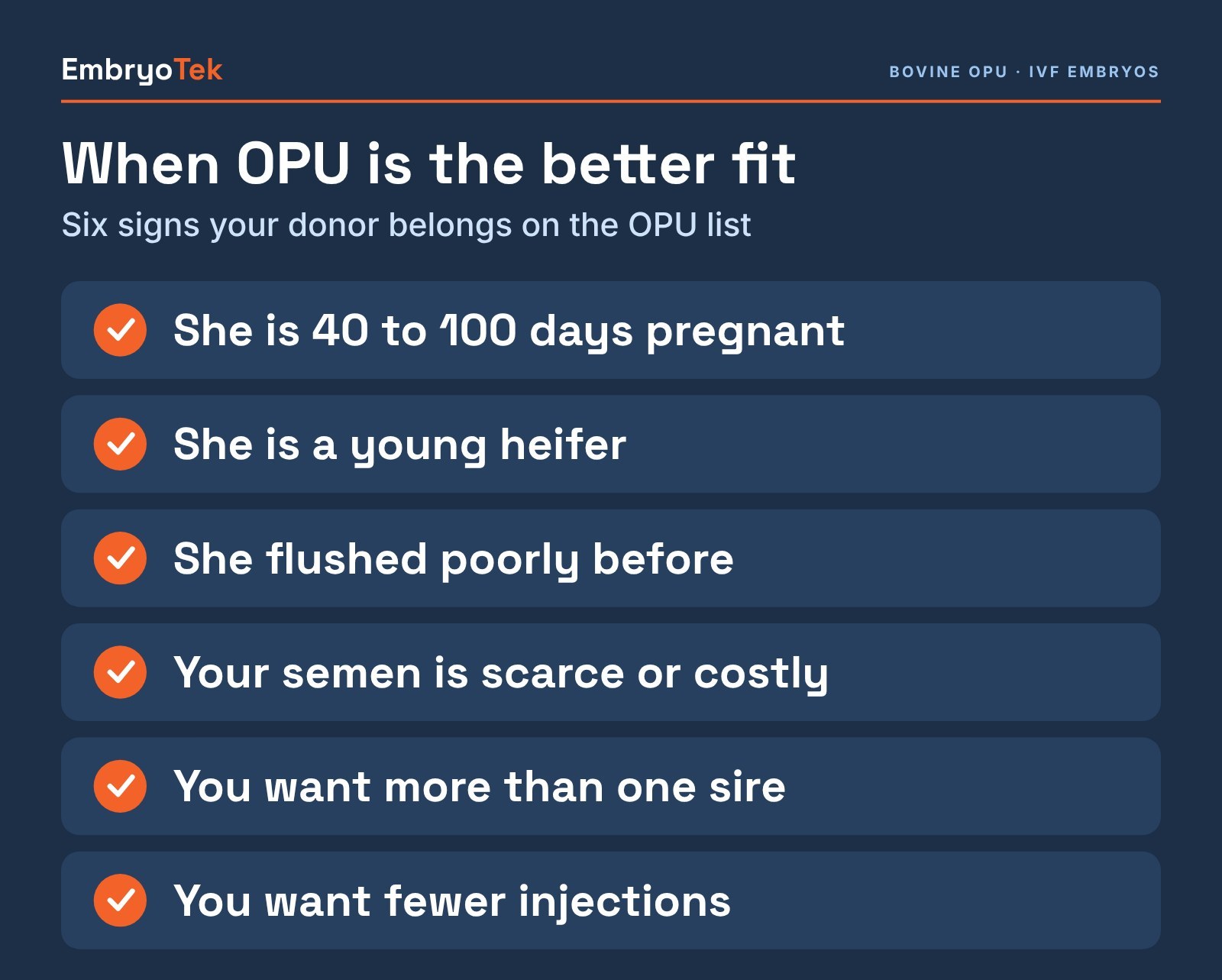
A pregnant cow cannot be flushed. She can be collected by OPU from 40 to 100 days of pregnancy, so she keeps making embryos while she carries her own calf. There is a slight risk of pregnancy loss.
OPU lets you start on a top heifer early and shorten the time between generations. Trans Ova prefers donors to be at least 10 months old. Younger heifers have to be physically mature enough and be examined first.
Some good cows simply do not respond to a flush program. Trans Ova has had success with donors that failed conventional flushing, because OPU collects the oocytes directly and does not depend on the same response.
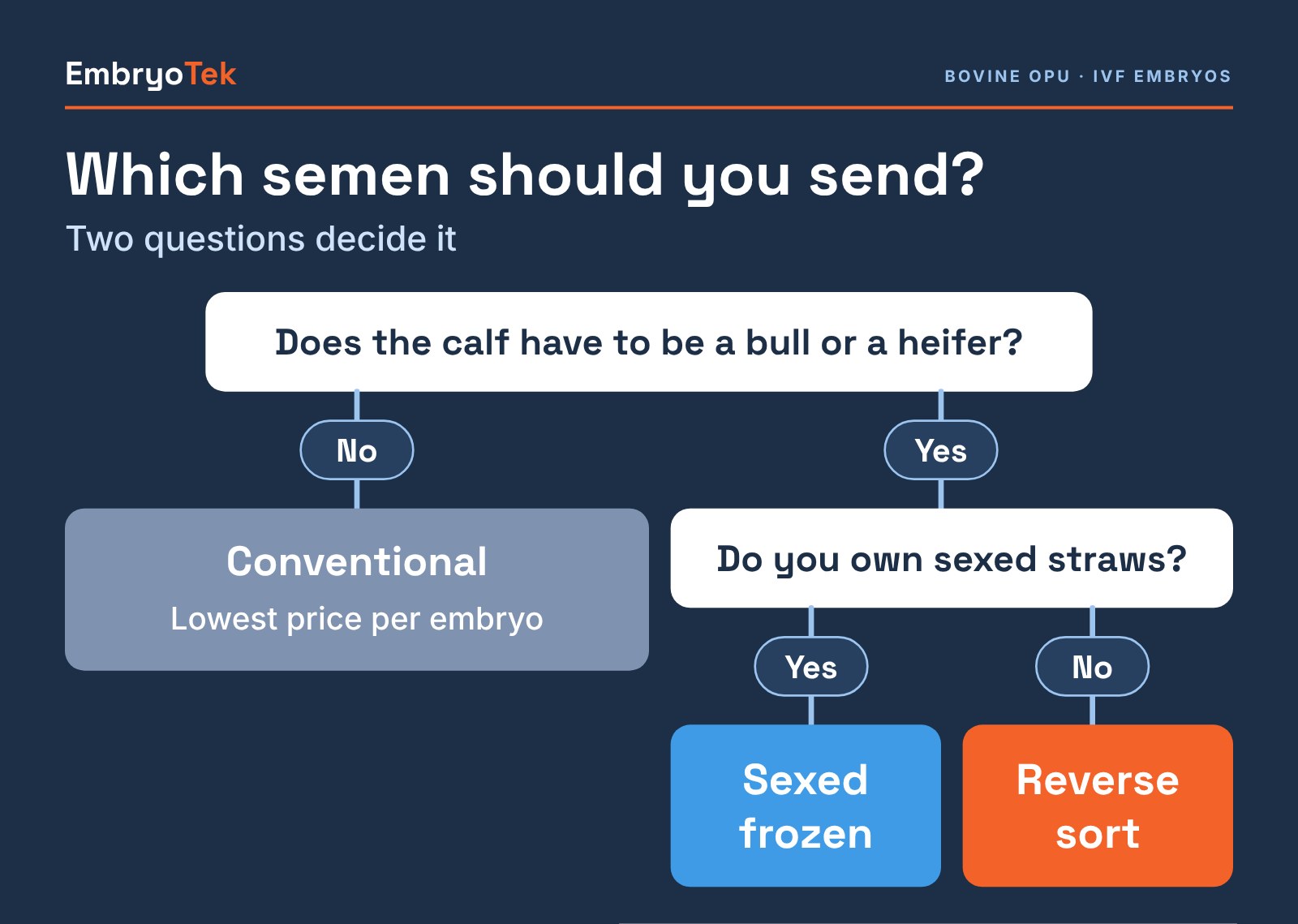
IVF uses less semen for each donor than breeding a flush cow. It also lets you use reverse-sorted semen: conventional frozen semen that is thawed and sorted for sex at the lab on fertilization day.
The oocytes from one collection can be split across more than one sire, so you can try several matings from the same donor on the same day.
With Trans Ova you can collect a donor with no hormones at all, or have her stimulated with FSH first. It is your choice for each donor. A donor can also be collected as often as every other week, as long as the veterinarian considers that best for her.
A flush is a good fit for an open, cycling cow that responds well to FSH, especially if you plan to freeze most of the embryos. Embryos from a flush generally freeze well, and no lab fertilization is involved. Some breeders use both: they flush a cow while she is open, then switch her to OPU once she is bred back.
It varies a lot from donor to donor. Trans Ova reports about 18 to 22 oocytes from a typical collection, with about 30% developing into viable embryos, or about 5 or 6 transferable embryos on average. It reports pregnancy rates of about 45 to 50% with fresh IVF embryos and 40 to 50% with frozen ones in its own recipients.
Call or text 901-482-3692 and tell us about her. When you are ready, schedule OPU online, see the price list, or read the donor checklist to get her ready for OPU day.
Pregnant donors can be collected by OPU from 40 to 100 days, and heifers from about 10 months. The limits, the risks and what results to expect.
Read the article →How conventional, sexed frozen and reverse-sorted semen compare for OPU and IVF embryos: calf sex, embryo numbers, cost and how much semen to send.
Read the article →